How Project Happy Face Is Delivering Free Dermatology Care to Teens in Underserved Rural Communities and Fighting Skincare Misinformation Seen on Social Media
This website does not provide medical advice and is for informational purposes only. The content here is not intended to be a substitute for professional medical advice, diagnosis, or treatment. Always seek the advice of your physician or other qualified health care provider with any questions you may have regarding a medical condition or treatment and before undertaking a new health care regimen. Never disregard professional medical advice or delay in seeking it because of something you have read on Spa & Beauty Today.
Some of the links on Spa & Beauty Today may contain affiliate links. This means if you click on the link and purchase the item, we may receive an affiliate commission at no extra cost to you. All opinions remain our own.
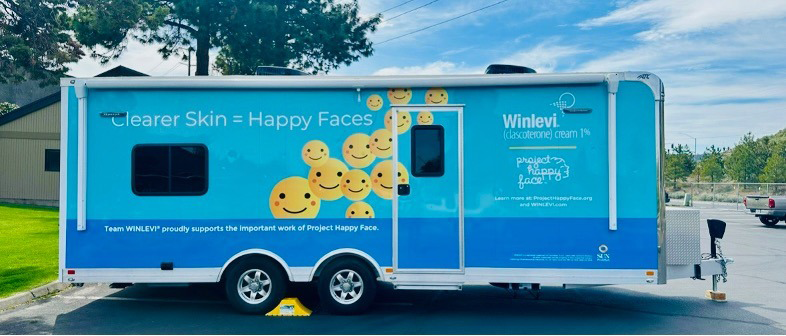
The Project Happy Face Mobile Dermatology Clinic. Project Happy Face is sponsored by Sun Pharmaceuticals, through its topical acne product WINLEVI®. Image courtesy of Project Happy Face.
For teens in rural communities, accessing dermatology care isn’t always easy. With limited local resources, some turn to social media platforms like TikTok for advice on managing skin concerns such as acne. At times, this can lead to skincare routines based on harmful misinformation.
Project Happy Face is changing this by bringing free dermatology care directly to under-resourced and geographically isolated communities. The non-profit provides acne treatment, including medical consultations and prescription medications. It also offers free skin cancer screenings for teens and first responders of all ages. Biopsies and follow-up care are provided when necessary.
We spoke with Amy Snow, PA-C, founder of Project Happy Face, to learn more about how the nonprofit empowers teens to take a proactive approach to skin health while helping them build confidence in their own skin.
Why did you start Project Happy Face and who does it serve?
Project Happy Face (PHF) was started when I identified a gap in the healthcare system, particularly for teenagers. The program began as a way to spread kindness and increase civility. I would treat the teens with acne for free in exchange for a signed contract to smile at strangers and give back to their communities once they have established their career.
How many locations has Project Happy Face visited and how many teens has it served so far? What locations does it plan to visit in the future?
PHF serves all of Central and Eastern Oregon. In 2025, over 300 patients were treated in our new mobile unit, which is sponsored by Sun Pharmaceuticals, through its topical acne product WINLEVI® (clascoterone) cream 1%.
PHF visited fire stations, police departments, parks and rec., health fairs, and rural community clinics. In one location we visited, Pendleton Rodeo Parade, an invasive melanoma was identified and biopsied. The mobile unit also visits rural high shools, allowing teens direct access to quality medical grade acne care.
In 2026, we plan to retrace our tracks from 2025. In addition we plan to visit Oregon Tribal Communities and hopefully start new pilot chapters in AZ, IL, and Alabama (one of the largest dermatology deserts in the USA).
Do you work directly with high schools or other local community organizations to meet with teens? Does a visit cost anything?
The visits are free of charge. All the medications and skincare products are free. We had a nice donation of face washes in 2025.
We have partnerships with school districts, OHSU Knight Cancer Institute, and community health clinics spread across the state of Oregon.
What is a typical visit like to an area? Can you walk us through your visit?
Here’s an example: The first Tuesday of every month PHF arrives at Culver High School at 10:30am. Culver is a town in Oregon with a population of around 1,600.
We spend about 30 minutes setting up the mobile unit. Students can book appointments online but often the school counselor assists in identifying and coordinating with the students who would like acne services.
The students are treated in a private exam room in the mobile unit. We ask about their classes, extra curricular activities, home life, and administer a chemical peel if they would like one. Peels are helpful for active pimples and scarring.
On National Rural Health Day, we delivered acne care to an entire high school grade 7-12 in Condon Oregon, a town of 711. For that event we set up in the auditorium and each class was released to come receive acne products. It was magical!
What are some of the most important messages that you want teens to take away about skincare and acne?
First, we always educate on the proper way for a teenager to wash their face. We educate on the excessive skincare products and misinformation on TikTok and social media. We teach the teenagers to use gentle products and always consult a dermatology provider before following an influencer’s “advice.”
We also educate on the importance of SPF, eating whole foods, and smiling! Happiness is such a healthy habit and it shows in our face! Smiling also reduces stress and initiates a calming effect in the brain.
What is some of popular misinformation going around on social media right now that people should watch out for?
Everyone believes they have “fungal acne,” and to address this they use apple cider vinegar on the skin and squeeze citrus on acne. Both of these ingredients can cause pigmentation changes and phytophoto dermatitis.
After a visit, does Project Happy Face provide any resources for continued care in underserved areas?
We have follow up visits, and telehealth visits to bridge the distance between our physical visits.
Another initiative we have is our DermBuddy(™) program where we pair a rural health provider with a dermatology PA or NP. This is our way of elevating dermatology care in rural clinics and giving those HCP a dermatology life line for and questions relating to a dermatology case they encounter, so we are bridging that provider gap as well.
What types of products do you generally recommend as part of a teen's everyday skincare routine, and is there anything that is advertised to teens that is popular but they should avoid?
I generally recommend Cetaphil Deep Cleansing Bar and 111Medco Hypochlorus Acid Spay. If someone has acne, I may recommend a medication that requires a prescription.
A lot of makeup companies and skincare companies are marketing directly to teenagers and the ingredients are not helpful for teen skin health. We are hearing a lot of teens wanting to reach for anti-aging serums and Vitamin C serums. This is causing a lot of rashes, acne flares, and perioral dermatitis. Less is more!
I also love to educate teens on NOT POPPING their pimples! This can cause scarring, more inflammation, and spread infection. Once you pop a pimple it takes 3 times longer to heal and can leave a red spot that can last months.
How can someone get involved in Project Happy Face?
Via our website www.projecthappyface.org. We are especially seeking dermatology providers for our DermBuddy(™) program and onsite provider volunteers for our pilot chapters in AZ, IL and AL.
What's next for Project Happy Face?
Continuing to spread smiles and kindness. We plan to expand to 3-4 states in 2026 – stay tuned!
About Amy Snow: Amy Snow, PA-C, is a Dermatology PA with over 21 years of expertise in medical, surgical, pediatric, and cosmetic dermatology. She founded Project Happy Face, a 501(c)(3) non-profit, in 2009.

A University of Michigan graduate, Lizzy Sherman is an award-winning writer and editor. You can also find her work in publications including Healthline, Sports Illustrated, Yahoo!, MindBodyGreen, Men’s Journal, Bezzy, and more.
She has been a featured guest speaker at Cal State University Northridge, Digital LA, and The National Association of Audience Marketing Professionals.
When she's not writing, Lizzy enjoys yoga and playing guitar. Follow her on Instagram and Twitter: @zillizy, @zillizy16