
Why I Started Surfing at 29, and Why It's the Wellness Practice Nobody Talks About
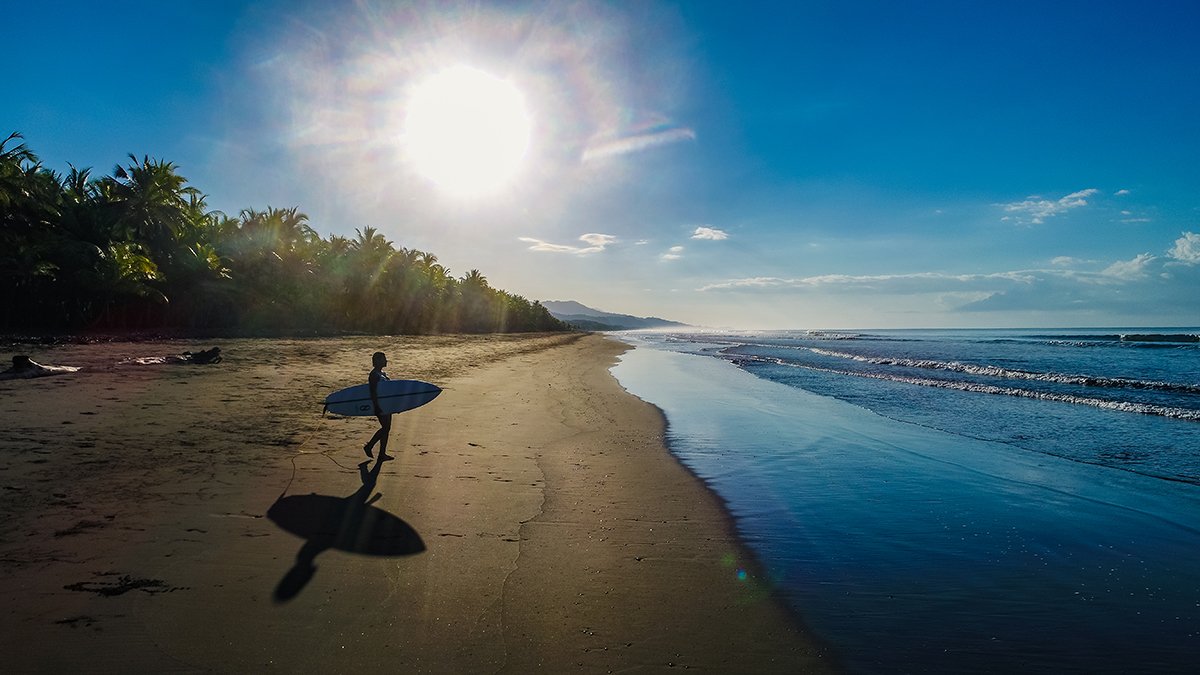
After 15 years of surfing, I think it may be the most underrated wellness practice in the world.
Written by Silene Vega, co-founder of Kalon Surf, Costa Rica
Before I paddled out for the first time, I thought surfing was for other people. Younger people. Braver people. People who grew up on the beach, which, growing up in Costa Rica, was almost everyone I knew, but somehow not me.
I was 29 when my husband finally convinced me to try. He's Dutch, which is funny (a boy from a country with no waves ended up teaching a Costa Rican girl how to stand up on a board). I told him I'd try it once. That was 15 years ago. I've been in the water ever since.
I want to write this piece for the women who read Spa & Beauty Today because they take care of themselves, and because they're always looking for the next thing that might actually help. Facials, retreats, yoga, breathwork. You've probably tried a lot. I'm not here to sell you on surfing as a sport. I'm here to tell you that after 15 years of it, including two pregnancies, I think it might be the most underrated wellness practice in the world.
It isn't about becoming good at it
Here's the first thing I want to say clearly: I am not a great surfer. I never have been. My husband is much better. Our surf coaches at the resort, men who have been doing this since they were children, could catch waves in their sleep. I catch maybe two out of every 10 I paddle for. Sometimes fewer.
That used to bother me, when I first started. Now I understand something I wish someone had told me sooner: the wellness benefit of surfing has almost nothing to do with how well you do it. It comes from being in the water. The waves you catch and the ones you miss both do the same thing for your body and your mind.
Once you understand that, the pressure disappears. You stop measuring the session in waves. You start measuring it in how you feel afterward.
What actually happens to you
I'm not a doctor, but I can tell you what I've seen in myself and in pretty much every woman who comes through here. They arrive tired. Not just physically. A specific kind of nervous-system tired that professional, high-functioning women know very well. Overstimulated. On.
After three days in the water, something changes. They sleep differently. They eat differently. They start laughing more. By the end of a week, most of them cry a little on the way to the airport, and it's not sad crying. It's the release of something they'd been carrying for years without noticing.
Part of this is physiological. Sustained physical attention forces your brain out of the loop of thinking about itself, and the ocean triggers your parasympathetic nervous system in a way that's genuinely measurable. But I think most of it is simpler than that. There is something about being held by something bigger than you, being humbled by it, being reminded that you are not in charge, that reorganizes a person. I don't have a scientific word for it. I just watch it happen every week.
Why I kept surfing through both pregnancies
People ask me about this a lot. My doctor was fine with it, for what it's worth. We adjusted the type of surfing I did, stayed close to shore, kept the waves small. But the honest reason I kept going was that I couldn't imagine not going.
Pregnancy is when a woman's body starts feeling like it belongs to other people. Your doctor has opinions. Your family has opinions. Strangers touch your belly in the supermarket without asking. The one place I could go where my body was still my own was the ocean. I paddled out with both of my sons still inside me, and it was the calmest I felt during either pregnancy.
Both of them surf now, by the way. The older one is better than me already, which he reminds me of constantly.
I don't recommend surfing during pregnancy to everyone. Every pregnancy is different, every woman is different, always ask your doctor. But I share the story because it tells you something about what the water can do for a woman: it can give you back a sense of yourself when the rest of the world is trying to define you.
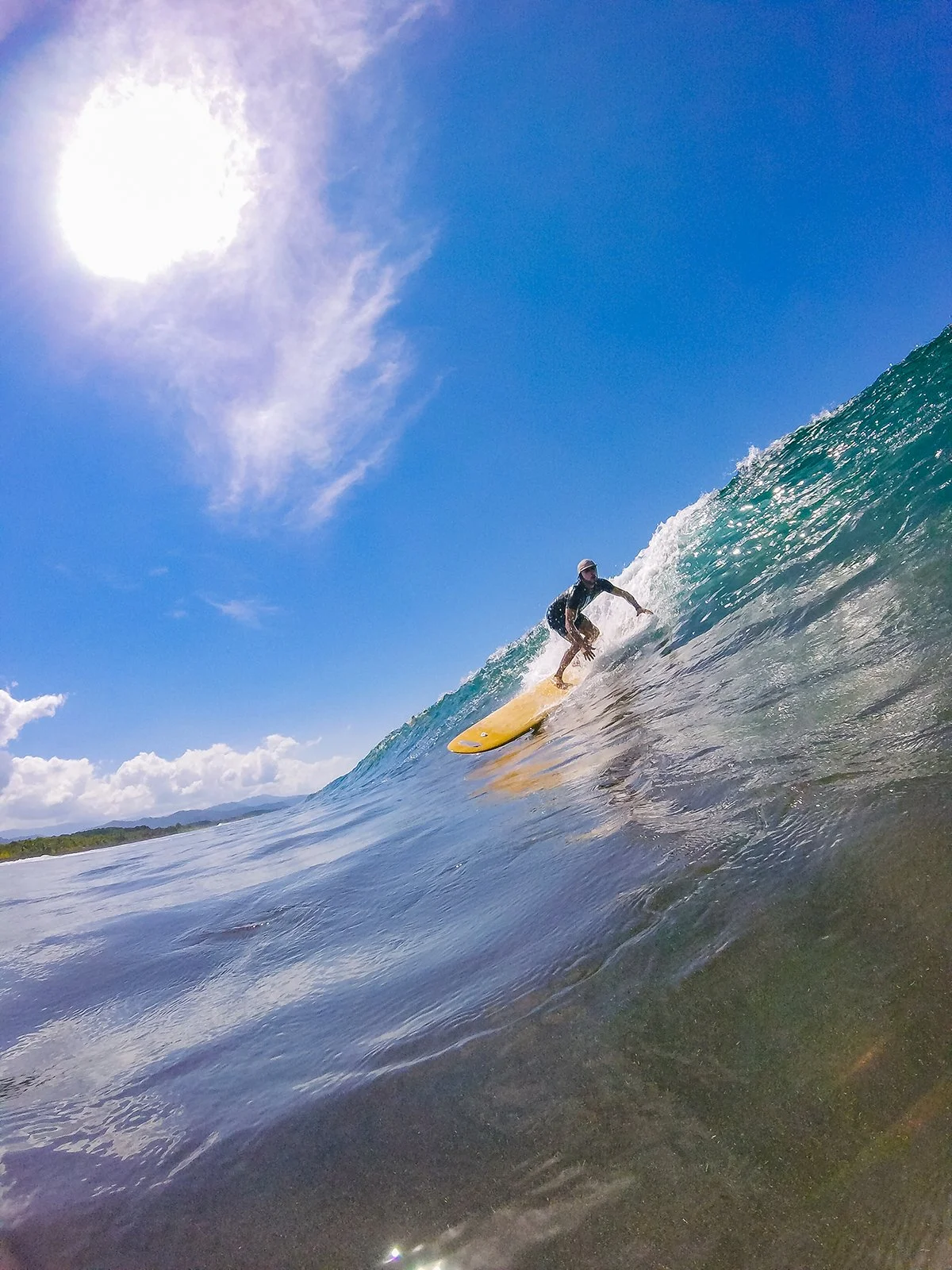
Surfing and being in the water can give you back a sense of yourself when the rest of the world is trying to define you.
How to try it without committing to becoming a surfer
A lot of women I meet want to try but are intimidated. Here's what I'd say to them.
You don't have to move to Costa Rica. You don't have to buy a wetsuit. You don't have to learn to read swells or memorize break names or any of the things that make surfing sound like a private club.
What you do need is one week, warm water, and a place with patient beginner coaches. That's really it.
At my resort we host a lot of women who arrive terrified and leave transformed, but you can also start closer to home. Most warm-water surf destinations (Costa Rica, Mexico, Portugal in summer, Morocco, Hawaii) have small-group beginner programs. Look for one that emphasizes patience over performance. If the marketing photos show only fit young people, keep scrolling. If the marketing shows women of different ages laughing while falling off boards, that's the one.
Bring reef-safe sunscreen. This matters, and in Costa Rica anything else is now illegal on protected beaches, but honestly your skin will thank you regardless. Bring a rash guard for sun protection. Don't bring makeup; you won't wear it, and it will feel wonderful. The one thing I always tell women, which sounds silly, is to bring a hair conditioner they actually love. Saltwater takes a lot out of your hair after a week, and there is something about a good conditioner in a rented shower at the end of a long surf day that feels like the most luxurious thing in the world. My mother laughs at me for this. But I stand by it.
The thing I wish someone had told me at 29
You are not too old. You are not too out of shape. You are not too anything.
The ocean does not care what you look like in a swimsuit. It doesn't care how many wrinkles you have or whether your arms are toned. It only cares that you paddle when the wave comes, and that you don't panic when it doesn't work out. Both of those are skills that adult women, with everything we've navigated, are actually very good at.
I started at 29. Some of my favorite students have started at 55, at 60, once at 68. The woman who came at 68 caught her first wave on day three. She cried. I cried. Her husband, watching from the beach, cried. We all cried and then we ate lunch and she went back out that afternoon and did it again.
That's the whole thing, really. That's what nobody tells you about the wellness practices that actually work: they're not the ones that promise transformation. They're the ones that give you back to yourself.
If you're reading this and something in it makes you curious, listen to that. Fifteen years ago, I listened to that. It's still the best thing I ever did.
[Photos courtesy of Kalon Surf]
Silene Vega co-founded Kalon Surf, an all-inclusive surf resort in Dominical, on Costa Rica's South Pacific coast, with her husband Kjeld. She surfs most mornings when the tide cooperates.